

Our new
history
tour
Beyond superficial historical explanations, this tour is designed to provide in depth knowledge about the land where worlds cyclically meet, clash and flourish together.
To enhance the historical experience, we prioritize local experts to share their knowledge on specific sites and events. In addition to the local experts, the tour will be enriched by our dear colleague and professor Šime Perić, holding a PhD in History, specialized in South-East European international relationships.
Beyond superficial historical explanations, this tour is designed to provide in depth knowledge about the land where worlds cyclically meet, clash and flourish together.
To enhance the historical experience, we prioritize local experts to share their knowledge on specific sites and events. In addition to the local experts, the tour will be enriched by our dear colleague and professor Šime Perić, holding a PhD in History, specialized in South-East European international relationships.
What sets
us apart
from the
competition:
We set the standard for historical travel in the region as the only specialized provider of history tours
We offer immersive experiences and a unique perspective that can’t be found on traditional tours
Our dedication to quality is reflected in our long-standing partnerships with local experts and service providers, lasting over 20 years
We commit to sustainable pricing strategy – business is good if its good for everyone
DAY 1
ARRIVAL
Upon arriving at Dubrovnik airport, you will be greeted by your driver who will transfer you to the hotel Argentina 5*, just a 10-minute walk from the old town. After a brief orientation, you will be treated to a welcome drink and dinner.
DAY 2
DUBROVNIK
At a glance
- guided tour of Dubrovnik
- leisure time
- dinner
Visit Dubrovnik with a local expert.
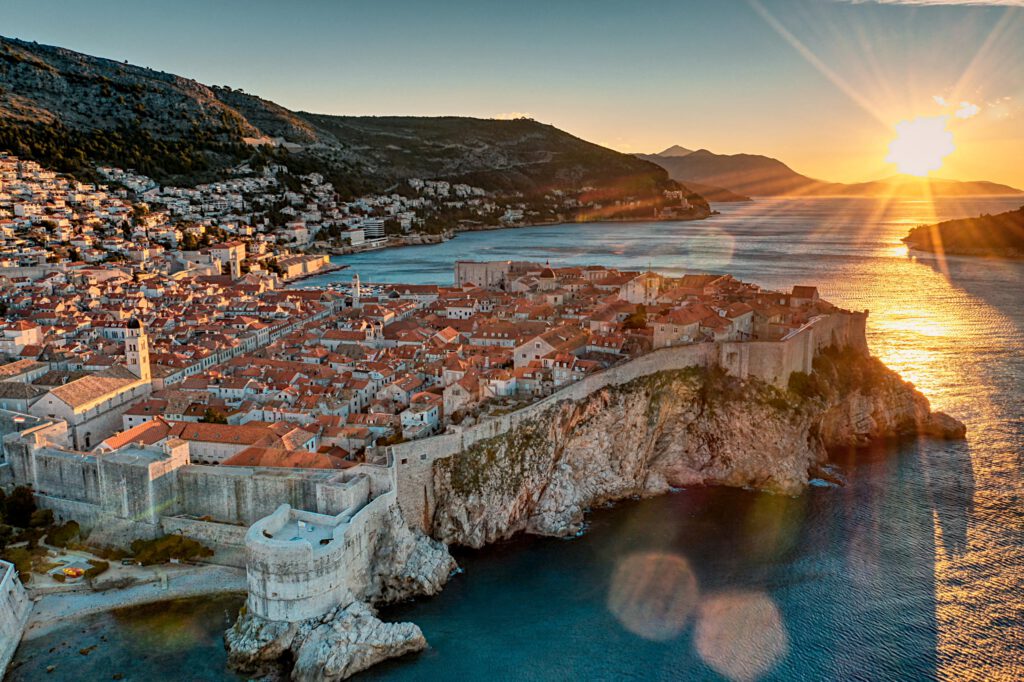
The prosperity of the city of Dubrovnik from earliest times was based on maritime trade. In the Middle Ages, as the Dubrovnik Republic, it was the only city-state on the eastern coast of the Adriatic that competed with the Republic of Venice. With its wealth and diplomacy, the city achieved an exceptional level of development. In the sixteenth century, Dubrovnik had the third largest navy in the world, counting approximately 180 ships sailing along the Mediterranean coast, reaching as far as England. For centuries the people of Dubrovnik were able to preserve their city-republic by skillful manoeuvring between East and West. In case the diplomacy would fail, the republic had another way of keeping the potential invaders out of the city – its mighty walls. The city walls are a defensive structure, short of two kilometres (a bit over one mile), twenty five metres (eighty two feet) high, and up to six metres (nineteen feet) thick, protected by fortifications on all four sides. They are a prominent landmark, among other famous attractions such as the Dubrovnik Cathedral, which houses paintings by Titian and Raffael, Rector’s Palace, Franciscan Monastery and several others.
In the evening take a short drive to a favorite local restaurant for a dinner of fish specialties.
Meals
B / L / D
Entrances
- FRANCISCAN MONASTERY, RECTOR’S PALACE, DOMINICAN MONASTERY (during the tour)
- DUBROVNIK CARD : CITY WALLS, MARITIME MUSEUM, ETC
Local guides
DUBROVNIK
DAY 3
CAVTAT
At a glance
- boat ride to Cavtat
- visit Cavtat
- afternoon and evening at leisure
Begin your day with a boat ride to Cavtat, a fishing village and popular resort located south of Dubrovnik. As you sail along the coast, you will be treated to breathtaking views of the city’s ancient walls, the island of Lokrum, and the surrounding region.
The history of Cavtat traces back to the sixth century BC when a Greek colony was established in the area. It later came under Roman rule in the third century BC. In the seventh century, the Avars and Slavs looted and destroyed the town, causing many of its inhabitants to seek refuge in a nearby area, which eventually became the city of Dubrovnik. In the fifteenth century Cavtat became part of the Republic of Ragusa, which saw a period of economic prosperity and architectural development. Many historical monuments were built during this time, such as the Franciscan monastery, the Rector’s palace, and the local parish church. One notable structure from this era is the Račić mausoleum, which was built by the famous Croatian sculptor Ivan Meštrović on top of a hill.
Meals
B
DAY 4
STON, DINGAČ WINERY AND HVAR
At a glance
- visit Ston
- visit the Dingač vineyards
- wine tasting and lunch
- ferry to the island of Hvar
- dinner
Ston’s strategic location on an isthmus connecting the Pelješac peninsula to the mainland, fertile fields with ample water and a shallow bay suitable for salt production, made it a crucial contributor to the financial prosperity of the Dubrovnik Republic. In 1333, Dubrovnik gained control of Ston and by 1359 a double defensive wall of forty towers, five bastions, and three forts was built. The saltworks in Ston, dating back to Roman times, are still in operation and produce high-quality salt, which is harvested in the traditional manner, by hand.
After a brief visit, continue to the Dingač vineyards, located on a steep rocky slope of the Pelješac peninsula, overlooking the Adriatic Sea. Learn about the history of Dingač and taste its highly regarded wines made from the Plavac Mali grape variety (cross between Crljenak – ancestral Zinfandel and Dobričić grapes), known for producing full-bodied red wines with notes of ripe fruit and a hint of spice. Dingač wines have won numerous awards and accolades, and are sure to impress even the most discerning palate. Lunch of local specialties will be served at the estate.
Your journey will continue along the charming winding roads and a short passage by ferry to the island of Hvar.
Meals
B / L / D
DAY 5
HVAR
At a glance
- guided tour of Hvar town
- afternoon and evening at leisure
Visit Hvar with a local expert
Hvar’s location, sheltered by neighboring islands, made it a vital point for marine navigation across the Adriatic Sea from the early days of sailing. During the Venetian Empire, between the thirteenth and eighteenth century, Hvar served as a major naval base and had a fortress located above the town walls. As the town’s prosperity increased, it also had a thriving cultural scene and is home to one of the oldest public theatres in Europe, opened in 1612. Many of the town’s historical features, such as the 700-year-old walls, fifteenth century public buildings, the St. Stephen’s Cathedral and the bell tower still remain today. The Benedictine monastery of St. John the Baptist dating from the seventeenth century is known for its agave lace production, listed as Intangible Cultural Heritage.
Meals
B
Entrances
- HVAR THEATRE, BENEDECTINE MONASTERY
Local guides
HVAR
DAY 6
STARI GRAD AND SPLIT
At a glance
- explore Stari Grad
- di je ručak?
- ferry to Split
- dinner
Ston’s strategic location on an isthmus connecting the Pelješac peninsula to the mainland, fertile fields with ample water and a shallow bay suitable for salt production, made it a crucial contributor to the financial prosperity of the Dubrovnik Republic. In 1333, Dubrovnik gained control of Ston and by 1359 a double defensive wall of forty towers, five bastions, and three forts was built. The saltworks in Ston, dating back to Roman times, are still in operation and produce high-quality salt, which is harvested in the traditional manner, by hand.
After a brief visit, continue to the Dingač vineyards, located on a steep rocky slope of the Pelješac peninsula, overlooking the Adriatic Sea. Learn about the history of Dingač and taste its highly regarded wines made from the Plavac Mali grape variety (cross between Crljenak – ancestral Zinfandel and Dobričić grapes), known for producing full-bodied red wines with notes of ripe fruit and a hint of spice. Dingač wines have won numerous awards and accolades, and are sure to impress even the most discerning palate. Lunch of local specialties will be served at the estate.
Your journey will continue along the charming winding roads and a short passage by ferry to the island of Hvar.
Meals
B / L / D
Entrances
- ST. ROCH CHURCH
Local guides
STARI GRAD
DAY 7
SPLIT
At a glance
- guided tour of Split
- optional: Salona
- afternoon and evening at leisure
Visit Split with a local expert.
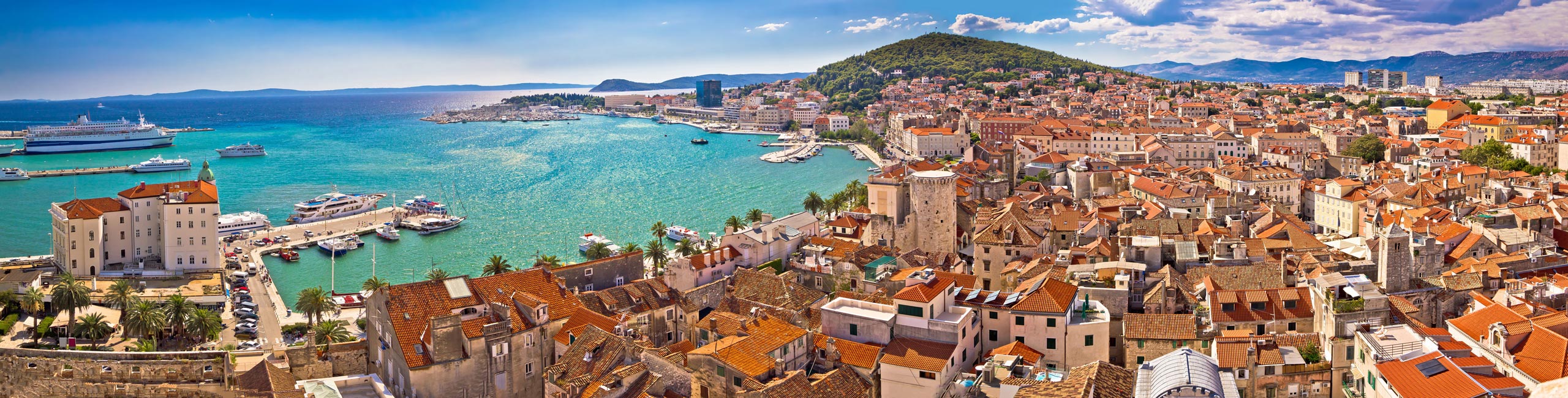
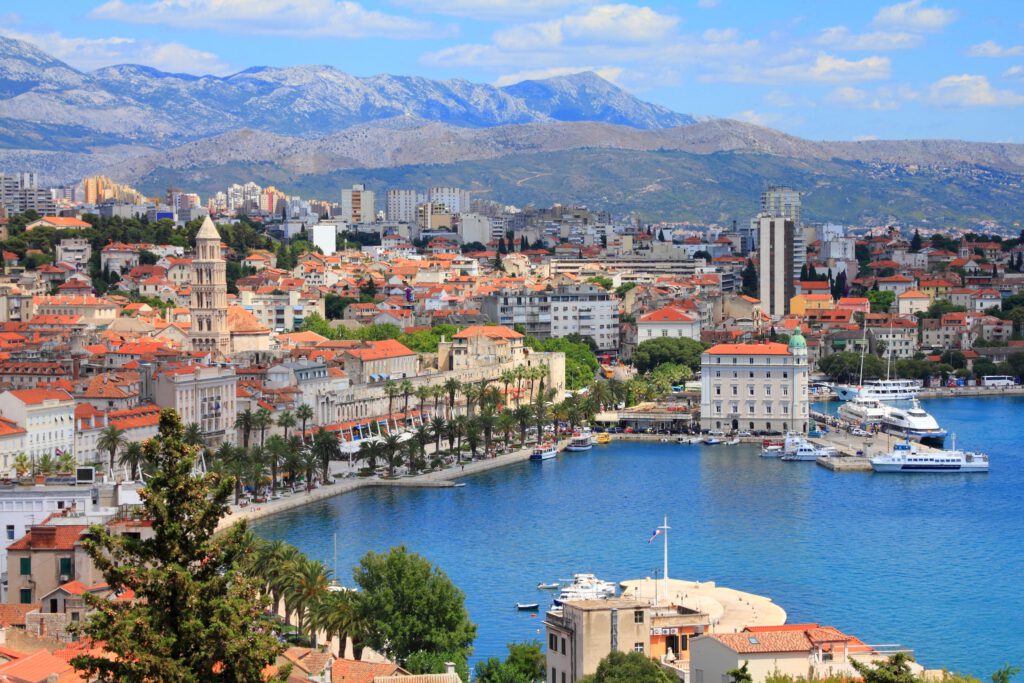
Split is located on the shores of Illyrian Dalmatia, founded as a Greek colony in the second century BC. At the turn of the fourth century AD the Roman Emperor Diocletian commissioned the construction of a palace as his residence in the area. Over time, the city developed around the palace. The palace itself was designed as a military stronghold with walls up to 20 feet thick and towers reaching a height of 50 feet. After the fall of the Roman Empire, the palace was used as a fortress by the local population and was gradually converted into a city. Many of the palace’s original structures have been preserved and can still be seen today, such as the peristyle court, the palace chapel, and the Temple of Jupiter. Additionally, there are several mediaeval buildings within the palace walls, including the Cathedral of Saint Domnius and the Bell Tower.
OPTIONAL: THE DIOCLETIAN AQUEDUCT AND SALONA WITH A LOCAL EXPERT
At the gates of the city stands a testament to Roman engineering and architectural prowess, the Diocletian Aqueduct. It is a nine kilometre (five and a half mile) gravity channel built in the late third and early fourth century AD, designed to transport water from the source of the Jadro River in Solin to the Diocletian Palace in Split using the principle of gravity. It utilised a thirty three metre drop at the source of the river and a combination of cutouts, tunnels, above-ground arches and buried channels to bring water to the palace. The aqueduct fell into disrepair in the mid sixth century due to damage inflicted during the Gothic invasions and laid in ruins for the next thirteen centuries. In the nineteenth century it was restored during the Austro-Hungarian rule, giving us a glimpse into the impressive technological capabilities of the ancient Romans.
Salona was founded in the third century BC and became the capital of the Roman province of Dalmatia in the ninth century AD. Under the rule of Emperor Augustus, Salona prospered and developed into a significant Roman city, complete with defensive walls, a theatre, an amphitheatre with capacity for fifteen thousand spectators, and a forum. In 170 AD, during the reign of Marcus Aurelius, the city was further fortified with a new wall encircling all three sections of the city, and it is estimated that the population at this time was around fifty thousand. Salona is of particular importance for the study of early Christian society and architecture. During the fifth and sixth century AD, many churches were constructed in the city, including basilicas with large cemeteries that contained the burials of martyrs. In 530 and 533 AD, regional church councils were also held in Salona.
Meals
B / L
Entrances
- CATHEDRAL, JUPITER MONUMENT, CELLARS OF DIOCLETIAN’S PALACE
Local guides
SPLIT
DAY 8
TROGIR AND ŠIBENIK
At a glance
- guided tour of Trogir
- guided tour of Šibenik
- dinner
Visit Trogir with a local expert.
Trogir was founded on a small island by Greek colonists in the third century BC. Over the centuries it was part of the Roman Empire, then under Byzantine rule, and for the longest period it was under the rule of the Republic of Venice. Today, it is considered one of the best-preserved examples of Romanesque-Gothic architecture in Europe. Trogir harbours one of the most prestigious works of art in Dalmatia, the thirteenth century St. Lawrence Church with a beautifully carved Roman portal. In the old town’s squares and maze-like streets you will discover façades of old portals, various human and animal motifs, beautiful palaces…
Continue to Šibenik and meet your local expert.
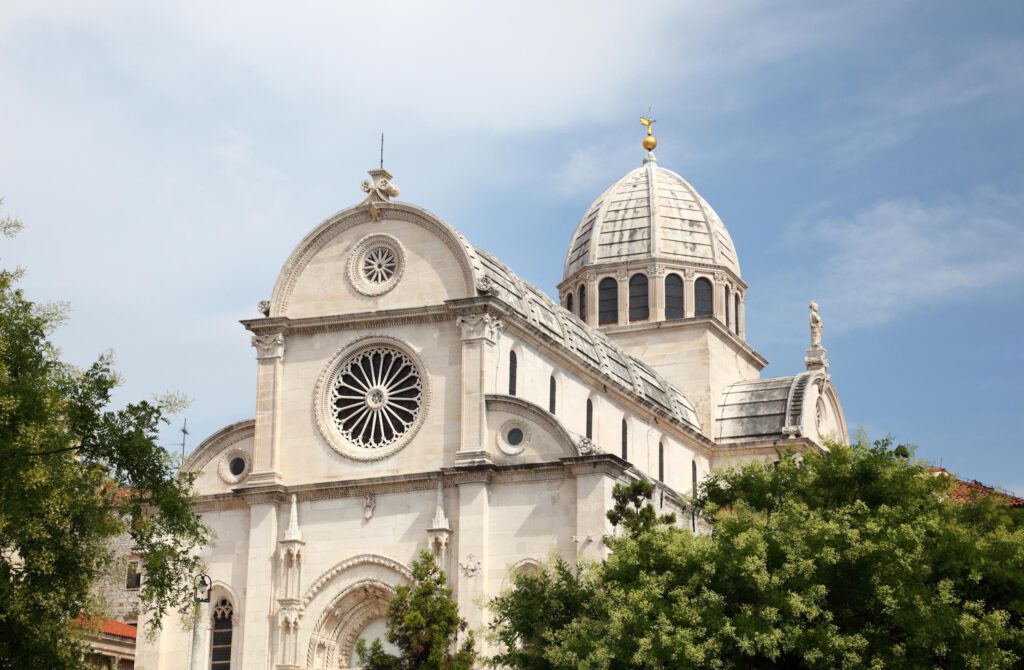
Šibenik developed from a Slavic settlement and unlike most of the towns on the coast, it does not have Greek or Roman roots. The town is set in the shape of an amphitheatre around the enclosed Šibenik Bay and is considered the best natural port on the Croatian coast. In the 9th century Croats had built a fortress overlooking the sea, transforming the settlement into a castrum which gradually became a city in the second half of the twelfth century. Venice ruled Šibenik from the fifteenth century and despite the Ottoman threat, economy and culture thrived. That was also the period when the most important cultural-historical monument of Šibenik was constructed: the renowned Šibenik Cathedral of St. James, built from 1431 to 1535. The Cathedral showcases a blend of Northern Italian, Dalmatian and Tuscan architectural styles from the fifteenth and sixteenth century. The building was constructed entirely of stone, using pioneering techniques for the vaulting and dome. The cathedral’s design is a combination of Gothic and Renaissance elements, such as the outstanding frieze adorned with seventy one sculpture of men, women and children. It is considered as the most significant example of Renaissance architecture in the entire country. It was the work of three architects: Francesco di Giacomo, Giorgio da Sebenico, and Niccolò di Giovanni Fiorentino who succeeded one another in its construction. Other valuable historical monuments include the town’s Hall, the Duke’s Palace (City Museum of Šibenik), the Little Loggia and more.
Meals
B / D
Entrances
- ST.LAWRENCE CHURCH, CATHEDRAL OF ST.JAMES
Local guides
TROGIR, ŠIBENIK
DAY 9
SAINT NICOLAS FORT, NATIONAL PARK KRKA AND THE KRKA ORTHODOX MONASTERY
At a glance
- visit Saint Nicolas fort (by boat)
- visit Krka National Park
- visit Krka Orthodox monastery
Board a boat in the port of Šibenik and sail to the St. Nicholas Fortress, a unique Renaissance building of Venetian fortification architecture, located on the islet Ljuljevac. The fortress was built in the sixteenth century from a sturdy blend of brick and stone. Its triangular shape and thirty two resident cannons made it a truly formidable defensive system. The fortress was built as part of the Venetian line of defence against the Ottomans, extending for a thousand kilometres (six hundred twenty one mile), from the Italian region of Lombardy, along the Adriatic coast of Croatia, all the way to Montenegro. In 2017 St. Nicholas Fortress was included in the World Heritage List making Šibenik only one of five cities in the world with two sites listed.
Explore the interior and exterior of the fortress before sailing back to Šibenik through the St. Anthony Channel.
The Krka National Park, spanning one hundred forty two square kilometres (fifty four square miles), offers a vast and largely undisturbed expanse of natural beauty. Due to its special position and the mosaic distribution of various types of habitats, it is characterised by rich and varied flora and fauna. This ria of the river Krka is considered an area of significant ecological value due to lack of pollution, biological vitality and ecosystems that remain fully intact.
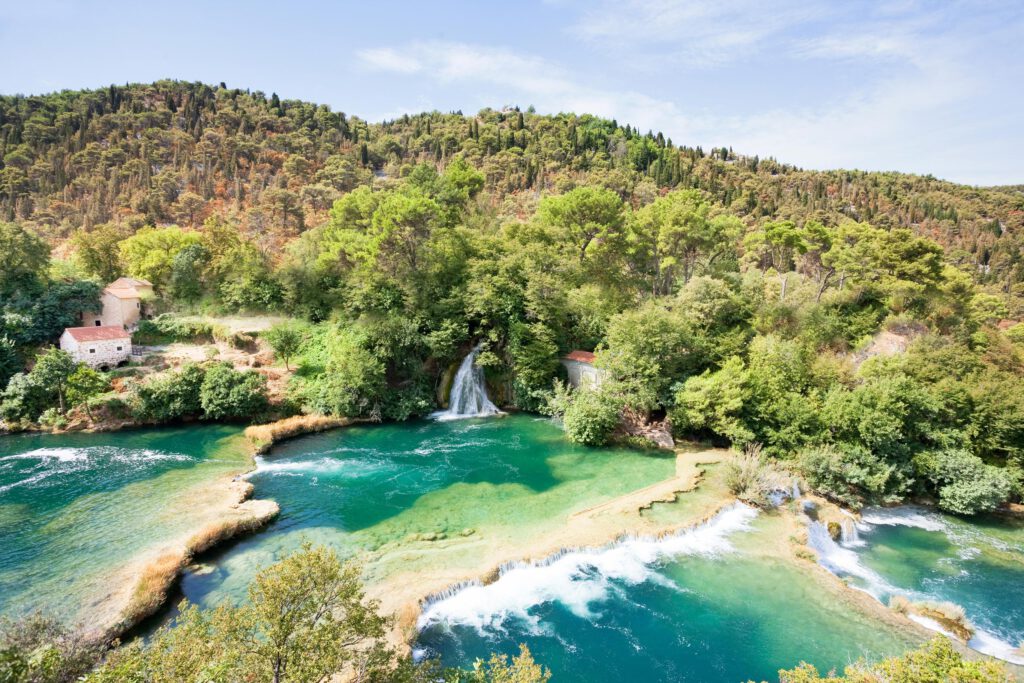
One of the most attractive parts of the park is Skradinski Buk, a large, clear natural pool with high waterfalls at one end and a progression of smaller cascades at the other. It is considered to be a prime example of calcium carbonate waterfalls in Europe. In the south, Skradinski Buk waterfall is flanked by traditional watermills. To the north, a nature trail passes another striking cascade, Roški Slap, and the Krka Monastery, built above ancient Roman catacombs.
Explore the park by boat and on foot, admire the waterfalls and enjoy the play of light on the whirlpools.
KRKA MONASTERY
The Krka Monastery, according to historical records, was established as a Catholic monastic community on the site of pre-existing catacombs. Legends hold that these catacombs were the location where Apostle Paul preached Christianity in the Titius (ancient name for Krka) River valley, during the first century AD. During the Ottoman incursion, the monastery was burned down multiple times and the friars were relocated to the town of Zadar. In the seventeenth century the monastery was made available to the newly arrived Orthodox population.
Visit the monastery with still visible catacombs, the church and an exceptionally rich treasure trove and library.
Meals
B
Entrances
- ST.NICOLAS FORT, KRKA NATIONAL PARK, KRKA ORTHODOX MONASTERY
Local guides
ST. NICOLAS FORT, ORTHODOX MONASTERY
DAY 10
ZADAR AND NIN
At a glance
- guided tour of Zadar
- guided tour of Nin
Visit Zadar with a local expert
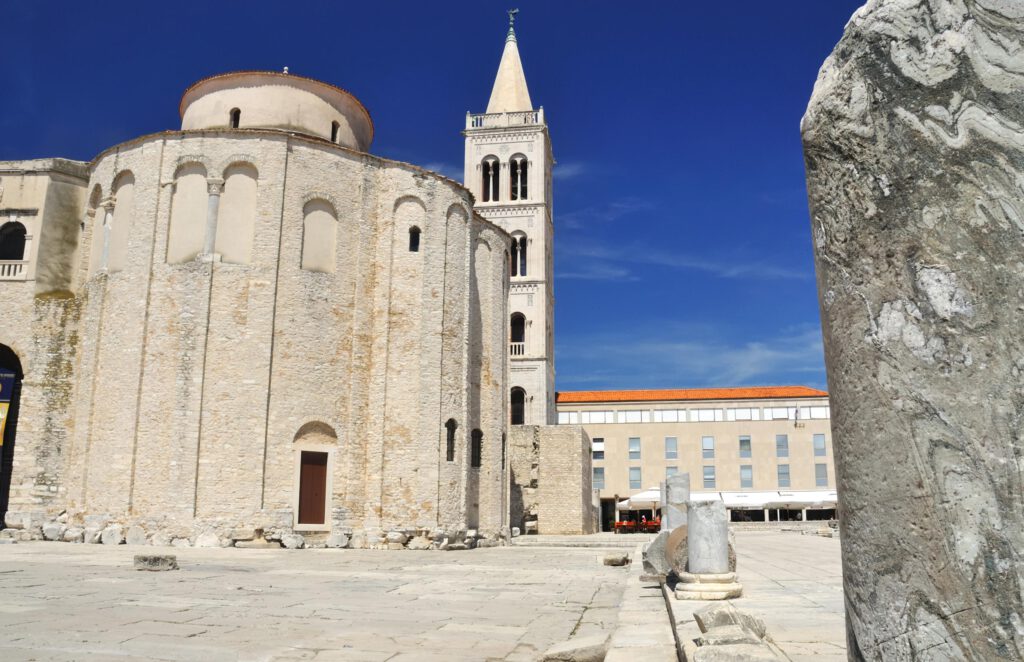
Zadar dates back to the ninth century BC as a Liburnian settlement called Jadera. It became a Roman town in the first century BC and remained a thriving commercial, cultural and artistic centre of Byzantine Dalmatia, despite the Avar and Slavic invasions of Dalmatia in the fifth and sixth century AD. The centuries that followed were tumultuous, with constant attacks from Venice and the Crusaders during their march towards Palestine. Despite the violence, a golden age of art and culture flourished in the city between the eleventh and fourteenth century, nurtured behind its protective walls which are today listed as a World Heritage Site. Some of the most significant sites in Zadar include the eighth century St. Donat’s circular church, the largest Pre-Romanesque building in Croatia, the Roman Forum, the Romanesque St. Anastasia’s basilica, the Five Wells square, and modern landmarks such as the Sea Organ, a unique musical instrument played by the waves.
Short drive to the town of Nin.
Located on a small island within a shallow lagoon, the ancient town of Nin boasts a rich history dating back three thousand years. During Roman times, the town flourished as a significant municipality under the name Enona. Dubbed as the oldest Croatian royal city, Nin is considered the birthplace of the Croatian state. For centuries, it served as a vital port on the eastern coast of the Adriatic sea. The rich archeological finds prove strong sea links with Greece and the Hellenistic world. The more recent explorations revealed a rarity – very well preserved Byzantine mosaic on the floor of a Roman villa. The old town harbours also a unique Pre-Romanesque cathedral, acting as a calendar and sundial!
Continue your journey to the mountainous Lika region, crossing the impressive Velebit massif.
Meals
B / D
Entrances
- ARCHAEOLOGICAL MUSEUM ZADAR
Local guides
ZADAR, NIN
DAY 11
NATIONAL PARK PLITVICE LAKES
At a glance
- discover Plitvice Lakes National Park
- Opatija
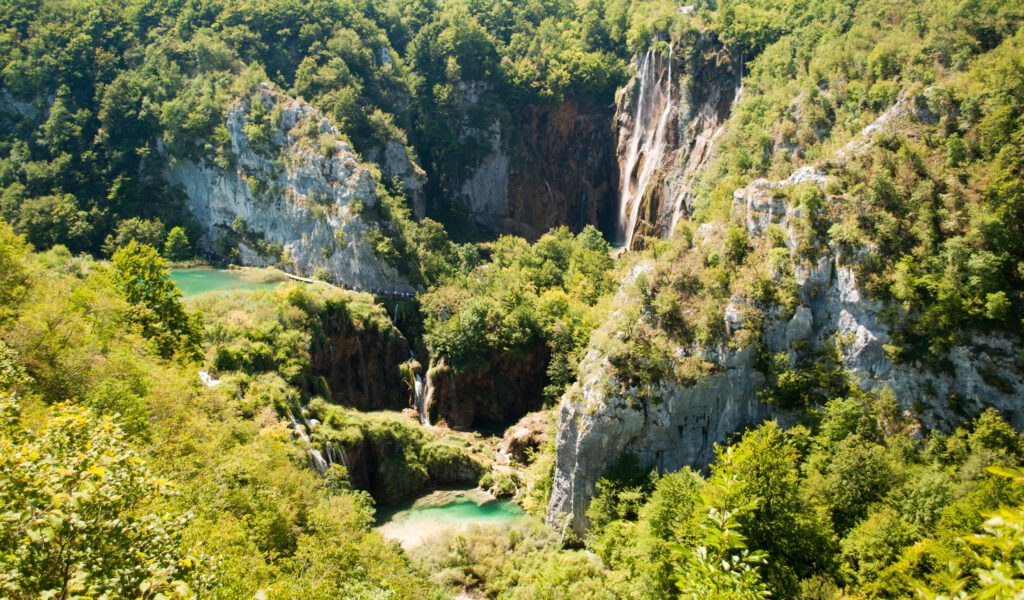
Plitvice Lakes National Park boasts a mountainous landscape, featuring sixteen distinct lakes brimming with crystal-clear turquoise water. The lakes are fed by an abundance of streams and creeks, creating a network of cascading waterfalls and interconnected bodies of water. The park’s main attraction are the travertine barriers, formed over the course of 10,000 years. The geographically and climatically diverse landscape has led to the development of a wide range of natural phenomena and an abundance of biodiversity.
Explore the park by traversing the winding paths and trails that meander around and over the water and by an electric boat connecting the twelve upper and four lower lakes.
We will enjoy lunch in a restaurant near the national park, and then continue our journey to Opatija set in the Kvarner Gulf.
Opatija was a sleepy fishing village until 1844, when Ignio Scarpa, a wealthy merchant decided to buy an old house there and build it into a villa called after his late wife, Angiolina. The reputation of Opatija began to grow when Scarpa’s friends started to visit and praise the town’s natural beauty and fresh air. As word of Opatija’s charms spread, it quickly became a destination of choice for prominent figures and celebrities. Emperor Franz Joseph I enjoyed the mild climate of the town, the Lumiere brothers filmed movies there, Isadora Duncan performed her dances, Gustav Mahler composed his symphonies, Albert Einstein, James Joyce and many others were flocking to Opatija to see and be seen. The six mile long seaside promenade, lush greenery, posh hotels and excellent restaurants attract to this day discernible visitors.
Meals
B / L / D
Entrances
- PLITVICE LAKES NATIONAL PARK
DAY 12
PULA AND POREČ

At a glance
- guided tour of Pula
- guided tour of Poreč
With a history spanning three millennia, Pula has been shaped by different cultures, civilizations and empires, resulting in an extraordinary historical legacy. Under Julius Caesar, Pula experienced a period of rapid growth and reached its population peak of thirty thousand. Today, the city is a living museum showcasing some of the best preserved ancient Roman buildings and monuments. The most famous of these is the Roman Amphitheater, also known as the Pula Arena, which is one of the best-preserved amphitheatres from antiquity and is still in use today. This impressive structure, capable of seating up to twenty thousand people, offers a glimpse of the grandeur and engineering prowess of the Roman Empire. Other notable and well-preserved ancient Roman structures include the first century AD triumphal arch, the Arch of Sergii, the Temple of Augustus, The Gate of Hercules and many others.
Poreč offers a perfect blend of history and Mediterranean charm. The Old Town of Poreč is a World Heritage Site, renowned for its well-preserved Roman architecture, including the iconic sixth century Euphrasian Basilica with its stunning Byzantine mosaics, considered one of the most important examples of early Christian art in the world. The town’s Roman heritage can be seen in its ancient town plan, which still preserves the original layout of the Roman Castrum, including the main streets Decumanus and Cardo Maximus. The Old Town is also home to a number of beautiful Venetian Gothic palaces and a few houses from the Romanesque period, adding to the town’s rich historical and architectural heritage.
Meals
B
Entrances
- PULA AMPHITHEATRE, EUPHRASIAN BASILICA
Local guides
PULA, POREČ
DAY 13
POSTOJNA CAVE AND LJUBLJANA
At a glance
- visit the Postojna cave
- guided tour of Ljubljana
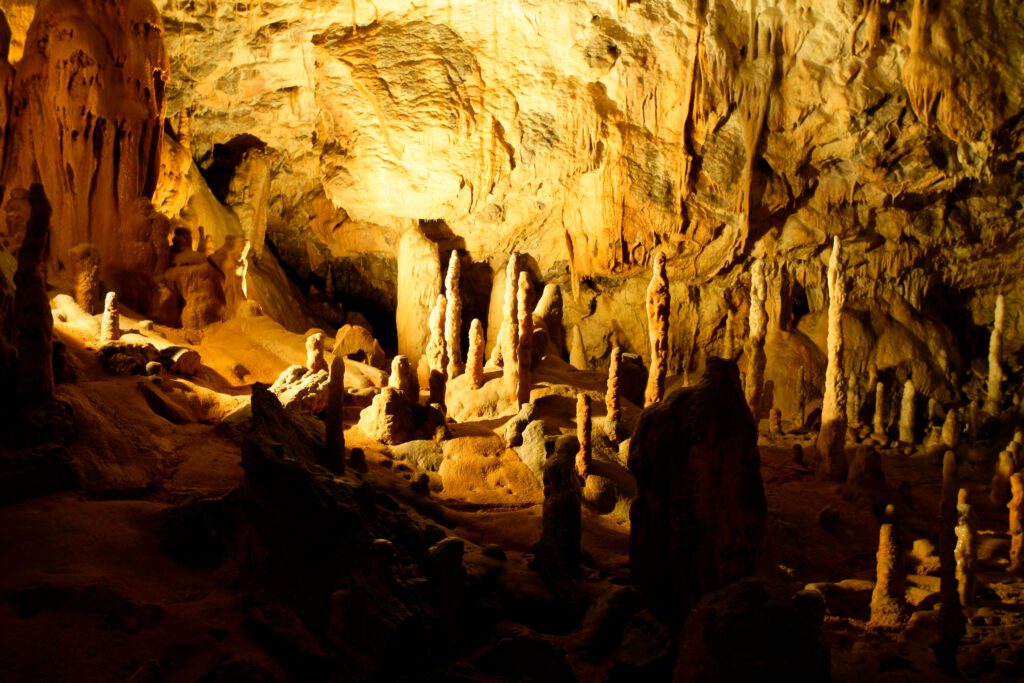
In the morning drive towards Postojna in Slovenia through a beautiful green scenery. The first destination is Postojna Cave, one of the largest and most impressive underground systems in Europe. This natural wonder hides over 20 kilometres (12 miles) of tunnels, galleries, and chambers with fascinating stalactites and stalagmites. Explore the cave on a guided tour including a walk and a ride on an electric train. Don’t miss the cave’s unique inhabitants – the proteus anguinus or “human fish,” a type of pale, pigmentation-free amphibian.
Ljubljana is the capital and largest city of Slovenia. Originally a Roman settlement called Emona, Ljubljana came under the control of the Habsburgs in 1335 and became a cultural and economical centre for Slovenians. Habsburg rule was interrupted only during Napoleon, between 1809-1813 when Ljubljana became the capital of the French Illyrian Provinces. Multiple earthquakes changed the appearance of the Slovenian capital. The most devastating one struck in 1895, but the reconstruction gave Ljubljana its present neoclassical and Art Nouveau appearance. The architect who contributed the most to the charm of the capital was Jože Plečnik who built the Triple Bridge, the National and University Library, the covered market buildings and many more.
Meals
B / L
Entrances
- POSTOJNA CAVE
Local guides
LJUBLJANA
DAY 14
BLED
At a glance
- visit Bled lake and castle
- afternoon at leisure
- farewell dinner
Henry II, ruler of the Holy Roman Empire, gifted Bled with the Bled Castle to Bishop Albuin in the eleventh century. It was declared state-owned property by the decree of the Viennese Court Chancellery in 1803, after it had been owned by the Brixen Bishops for almost 800 years. With its glacial lake, small island and castle perched on a cliff overlooking the lake, Bled became a popular tourist destination for the Austro-Hungarian nobility. After the dissolution of Austria-Hungary in 1918, the Karađorđević family, rulers of the Yugoslav Kingdom, built their summer residence on the shores of the lake. Following the Second World War, the residence was nationalised and taken over by Tito. The natural beauty and its association with historic celebrities makes Bled an en vogue destination even today.
This evening, gather over farewell dinner at one of the most renowned restaurants in the capital.
Meals
B / D
Entrances
- BLED CASTLE
DAY 15
DEPARTURE
Transfer to the airport
Meals
B
Feeling a bit packed?
Is this itinerary feeling a bit packed with activities and not leaving enough time for rest and relaxation? If so, here is a solution. Consider adding an extra day or two to your program to allow some downtime. Take advantage of the hotel amenities, do people-watching over sipping a cup of coffee or Aperol spritz in a nice bar, go for a lazy stroll, and just relax. If you’re interested in further exploration of the surroundings, your driver guide will be happy to accommodate. Here are a few suggestions for activities to enjoy during your extra time:
Dubrovnik
- Take the cable car to Mount Srđ
- Discover the island of Lokrum
Split
- Visit the Meštrović museum
- Climb the Marjan Hill
-
Visit Salona
Opatija
- Stroll along the lungomare to Lovran / Volosko
- Visit Rijeka
Ljubljana
- Visit the Ljubljana castle
- Take a boat ride on the Ljubljanica River
Dubrovnik
Take the cable car to Mount Srđ
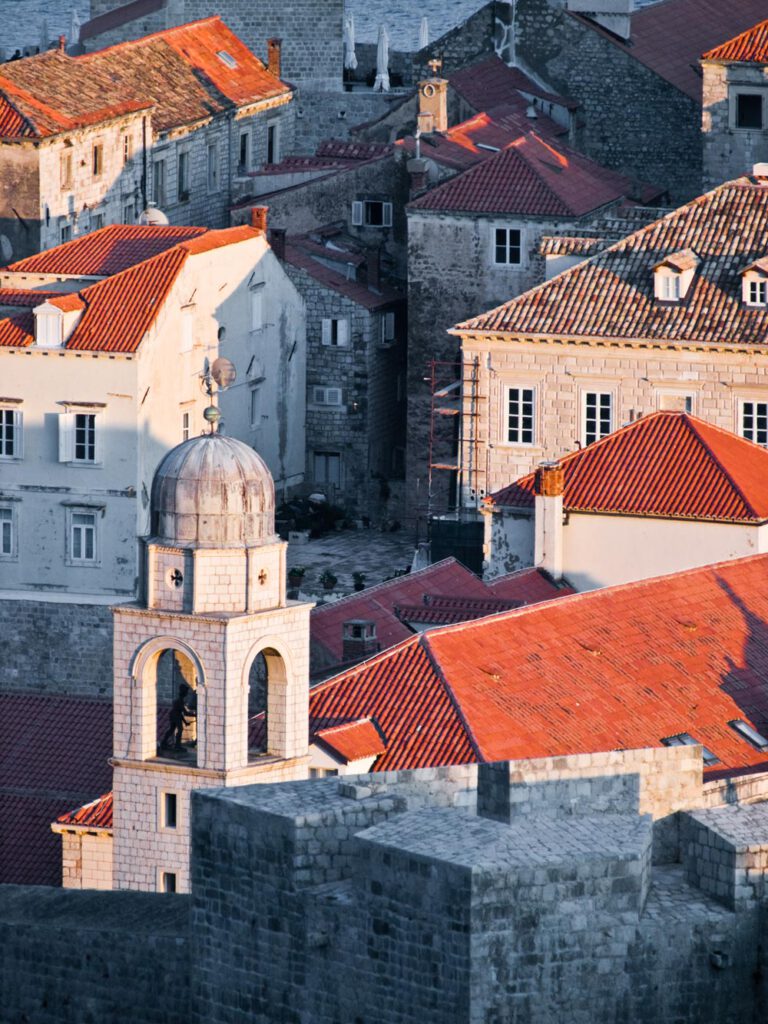
Srđ sits at 412-metre (1,352 ft) elevation. It is located just behind the Old Town, a perfect spot to get a bird’s eye view of the surrounding landscape and Dubrovnik ’s red rooftops. At the top of mount Srđ stands Fort Imperial, a defensive structure built by the French during the Napoleonic Wars. There is also a museum dedicated to the Homeland war. The mountain became a popular destination for its splendid views and a very good restaurant.
Discover the island of Lokrum
Lokrum is a small island located just off the coast of Dubrovnik. It stretches from northwest to southeast and receives regular ferry service from the Old City port. The most popular attractions on Lokrum are the 16th century Fort Royal, a saltwater lake, over 500 species of plants and nice walking trails.
Split
Visit the Meštrović museum
The Meštrović Museum in Split is a true gem for art enthusiasts. Housed in the former home and studio of Ivan Meštrović, one of the most renowned Croatian artists of the early 20th century, the museum offers a unique opportunity to see the artist’s stunning sculptures, paintings and drawings. From marble and bronze masterpieces to delicate plaster and wood carvings, the museum’s collection showcases Meštrović’s diverse range of artistic skills. Meštrović’s art extends beyond Croatia’s borders – his statues of the Bowman and the Spearman, known as the Equestrian Indians, can be found standing as the gatekeepers at the western edge of Chicago’s Grant Park in the United States.
Climb the Marjan Hill
Marjan Hill is a beloved destination for both locals and tourists due its natural beauty, recreational opportunities, and cultural attractions. One of the standout features of Marjan Hill is its lush pine forest, offering a refreshing and peaceful escape from the bustling urban environment. Visitors can explore the network of walking trails winding through the forest, taking in sights such as the Water Tower, the Lookout Point and the Chapel of St. Jerome, a beautiful building crafted by the famous Croatian artist Ivan Meštrović.
Visit Salona
Salona is an ancient Roman city located in the proximity of Split. It was the capital of the Roman province of Dalmatia and an important cultural and economic center. Today, the site of Salona is home to a number of historical and cultural attractions, including the ruins of the city’s amphitheatre built in the 2nd century AD. With a capacity of around 20,000 spectators, it was one of the largest in the Roman Empire, used for a variety of events including gladiator games and performances. There are also temples, baths, early Christian churches and monasteries.
Opatija
Stroll along the lungomare and the Angiolina Park
The Franz Joseph I Promenade, known as Lungomare, is a very romantic seaside promenade taking you through historical landmarks such as the Park of St. James, the Villa Angiolina, the statue of the Girl with the Seagull. The well-maintained paths, fresh breeze from the sea and beautiful setting make it a popular spot for locals and tourists.
Visit Rijeka
Rijeka is a city located in the Kvarner Gulf, known for its rich history and cultural diversity. One of its top attractions is the Trsat Castle, a medieval fortress perched atop a hill overlooking the city. Another must-see destination is the Korzo, a pedestrian street lined with cafes, restaurants and shops. It is the city’s main street and a hub of cultural activity, hosting a variety of events throughout the year. In the morning, be sure to visit the city’s green market and enjoy its lively atmosphere.
Ljubljana
Visit the Ljubljana castle
Ljubljana Castle is a medieval castle located in the centre of Ljubljana. It is located on a hill overlooking the city and is a popular destination for locals and tourists alike. The castle can be easily accessed via cable car which transports passengers from the city centre to the castle grounds. The castle has a long history dating back to the 11th century, it has undergone numerous renovations and expansions over the years. The castle offers a variety of exhibits and artefacts related to its past. In addition to its historical exhibits, the castle also offers panoramic views of the city and the surrounding area from its observation tower.
Boat ride on the Ljubljanica River
Experience the capital from a different perspective. The river flows through the center of Ljubljana, passing by many of the city’s top attractions such as the Ljubljana Castle, the Triple Bridge and the Dragon Bridge. It is a unique and enjoyable way to experience the beauty and charm of the city of Ljubljana.

Tours
History Tour
Wine Tour
Contact
Social
Noble Skills 2023 | Implemented by: Pixel